

Foot & Ankle Arthritis in New Orleans

Foot and ankle arthritis is the progressive breakdown of cartilage within the joints of the foot or ankle. Cartilage normally allows bones to glide smoothly during movement. When that protective layer deteriorates, the joint becomes inflamed, stiff, and painfulAs cartilage thins, joint space narrows. In advanced stages, bones may begin to rub directly against one another — commonly referred to as “bone-on-bone.” This leads to swelling, decreased motion, and difficulty with walking or push-off.
Arthritis may develop gradually over time (degenerative osteoarthritis), or it may follow an injury such as a fracture, ligament tear, or joint instability. This is known as post-traumatic arthritis and can develop years after the original injury.
Because the foot and ankle bear full body weight with every step, even mild joint degeneration can significantly affect mobility and quality of life.




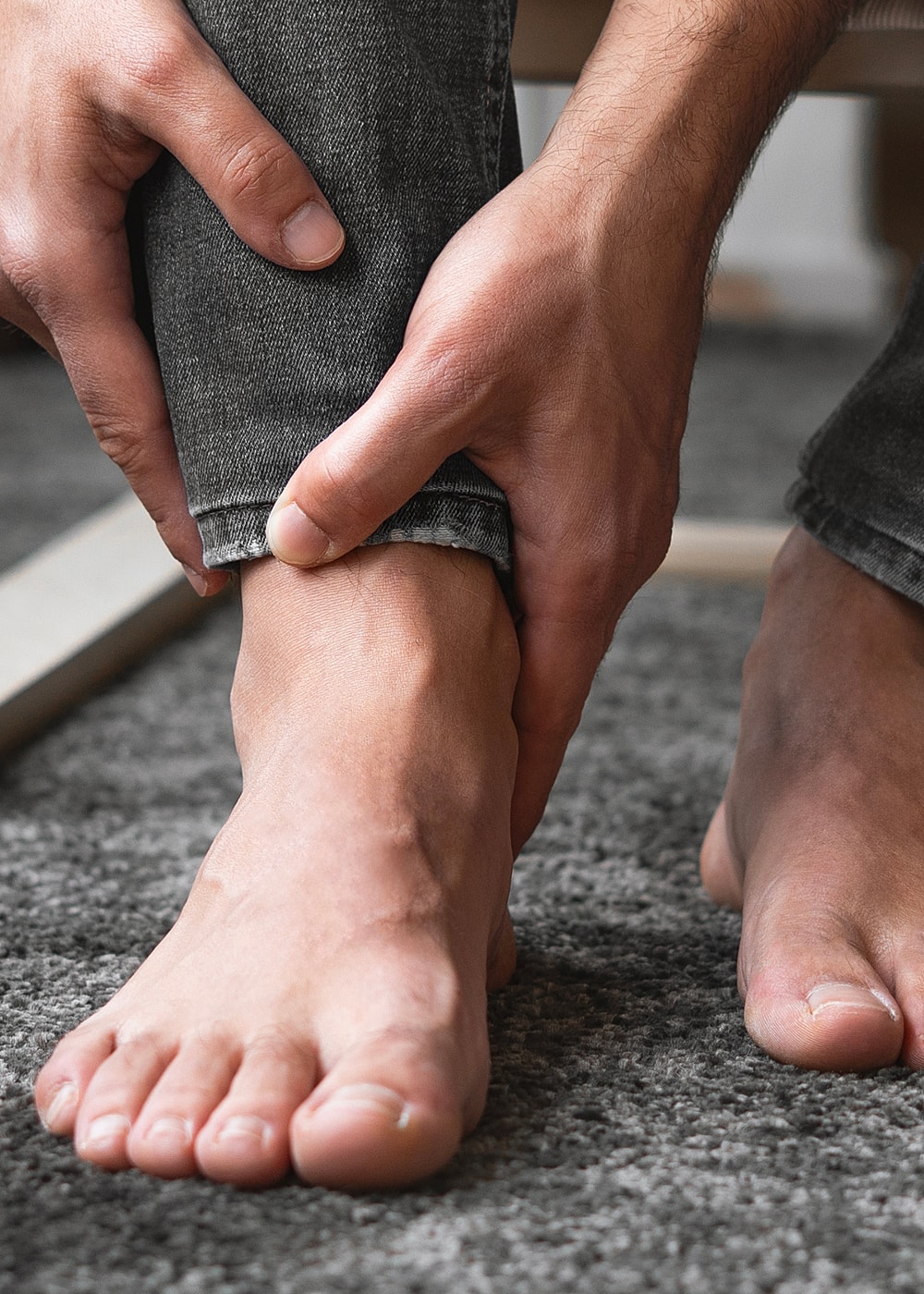
Reduced joint motion, especially in the morning or after periods of rest.
Discomfort during standing, walking, or push-off due to cartilage loss within the joint.
Around the affected joint, particularly after prolonged walking or standing.
Limited ability to bend or move the joint normally as arthritis progresses.
A feeling of joint friction or mechanical catching caused by uneven cartilage surfaces.
Sensitivity to pressure directly over the arthritic joint.
Pain or irritation when wearing certain footwear due to joint enlargement or bone spurs.
Difficulty walking long distances or remaining on your feet for extended periods.

Accurate diagnosis begins with a focused clinical evaluation, including assessment of joint motion, alignment, stability, and areas of localized tenderness. Because the foot and ankle function under load, weight-bearing X-rays are essential to evaluate joint space narrowing, bone spur formation, deformity, and overall structural alignment.
When symptoms are disproportionate to X-ray findings, or when soft tissue involvement is suspected, advanced imaging such as MRI or ultrasound may be used to evaluate cartilage integrity, tendon pathology, and surrounding joint structures.
A precise diagnosis allows treatment to be tailored to the stage and location of arthritis — rather than applying a one-size-fits-all approach.
Treatment is guided by the severity of joint degeneration, the specific joint involved, and your long-term functional goals. Whenever possible, care begins with joint preservation strategies designed to reduce inflammation, improve mechanics, and slow progression of cartilage loss.
Initial treatment may include custom orthotics to reduce joint stress, shoe modifications to optimize biomechanics, targeted anti-inflammatory strategies, and bracing or short-term immobilization when indicated. For many patients, these measures provide meaningful symptom relief and improved mobility.
For appropriate candidates, regenerative and biologic therapies may be incorporated to further support the joint environment. Depending on the stage and location of arthritis, treatment may include platelet-rich plasma (PRP), amniotic tissue injections, biologic matrices, and structured offloading protocols designed to protect healing tissue.
These therapies are selected based on joint condition, degree of degeneration, and overall patient health. In carefully selected patients, regenerative strategies may improve function and, in some cases, delay the need for surgical intervention.
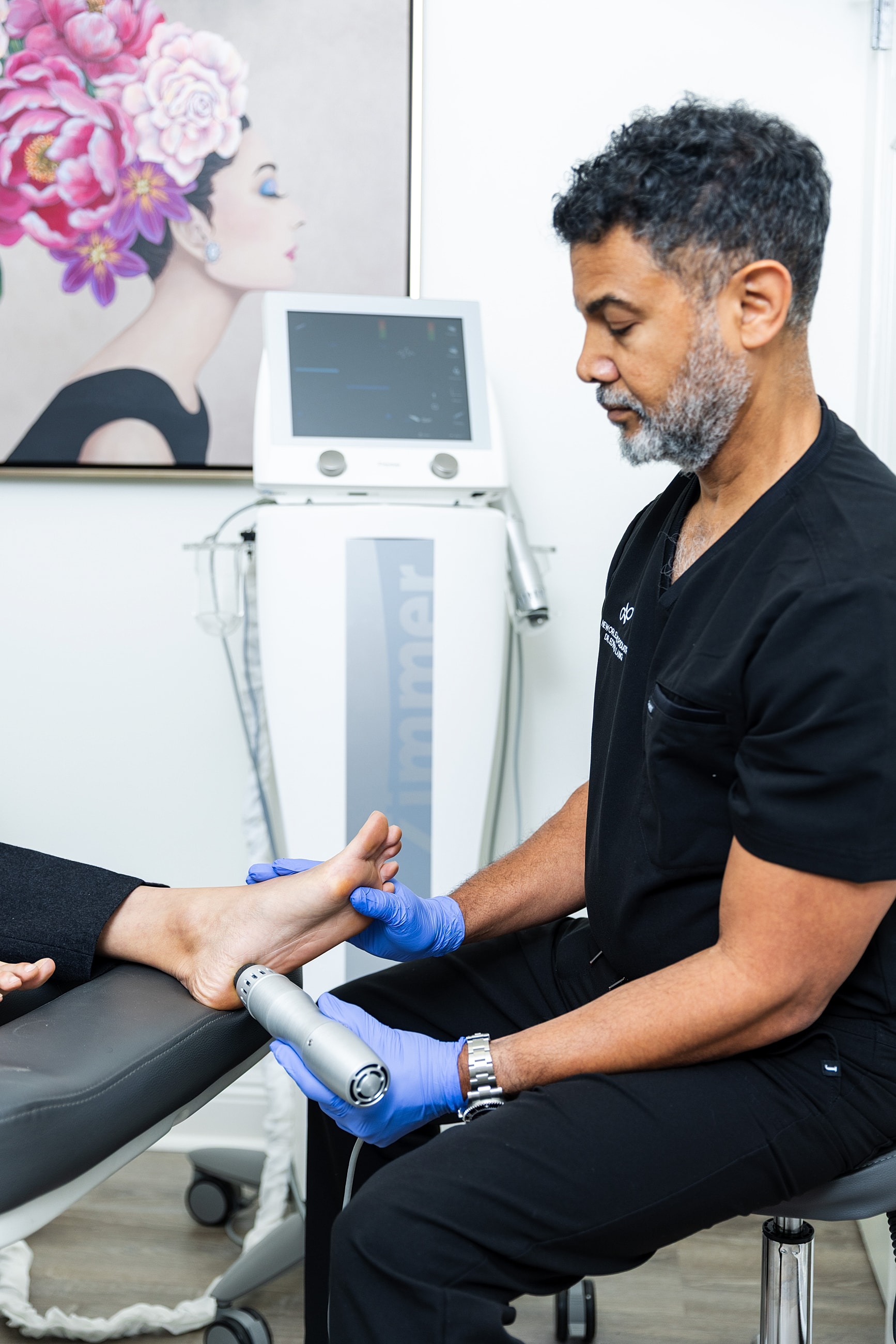

One of the most potent regenerative centrifuges available, delivering the highest concentration of platelets and growth factors to accelerate true tissue healing.
Providing powerful biologic scaffolding to repair damaged tissue and reduce inflammation.
A regenerative treatment for osteoarthritis, joint pain, and tendon injuries that use a concentrated form of a natural blood protein to inhibit enzymes that break down cartilage.
By reducing friction and inflammation, it helps alleviate stiffness and discomfort associated with foot and ankle arthritis.
Enhances circulation, decreases inflammation, and supports nerve regeneration—making it especially beneficial for chronic pain, neuropathy, and degenerative joint conditions.
Combines medical-grade ozone with vitamins and regenerative nutrients to stimulate tissue repair at its source. Prolozone promotes collagen regeneration, restores joint stability, and relieves pain.
stimulates a controlled healing response in damaged or weakened soft tissue

In addition to biologic therapies, treatment may include custom orthotics, anti-inflammatory nutrition, and prescription medications such as NSAIDs or targeted corticosteroid injections. These components are carefully selected to stabilize the joint, control inflammation, and preserve long-term mobility.

In advanced cases of hallux or severe joint degeneration, surgical intervention — including MPJ procedures, joint fusion, or reconstructive correction — may be required when conservative and regenerative treatments no longer provide adequate relief.
Surgical decisions are made carefully, with a focus on restoring long-term function and structural stability.

Whether you are seeking conservative care, regenerative therapies, or surgical guidance, a personalized evaluation is the first step toward protecting long-term joint function.
Call or text our office using the links below, or complete the contact form to request your consultation.


Call Us: (504) 897-3627
Text Us: (504) 897-3627
Mon-Thurs: 7:00 AM – 5:00 PM
Fri: 7:00 AM - 12 PM (phones on until 5 PM, texting is provided after hours until 9pm)
