

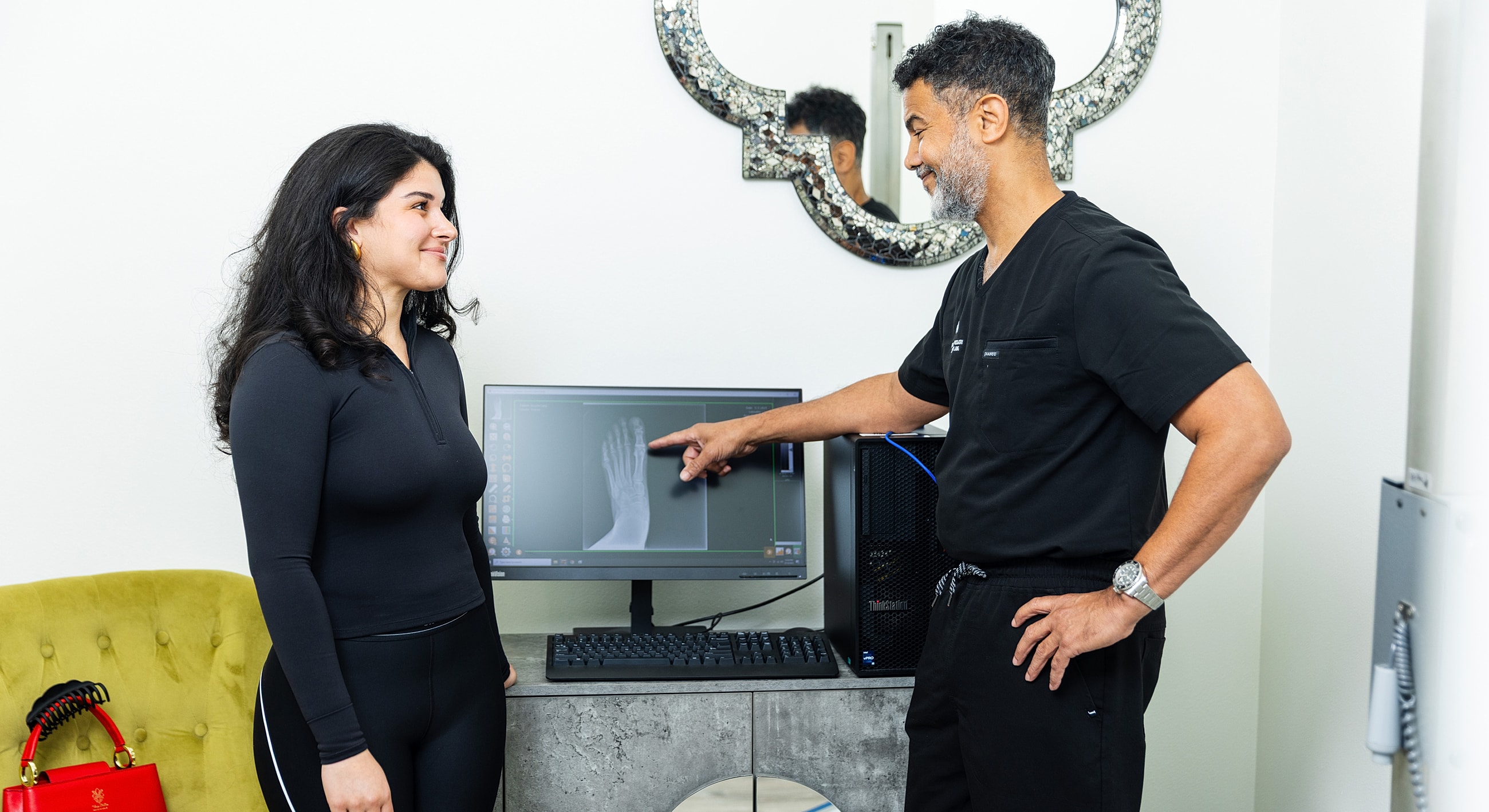

A bunion, also known as hallux valgus, is a deformity that causes a painful bony bump to develop at the base of the big toe. The condition occurs when the joint becomes unstable, allowing the big toe to drift toward the second toe while the forefoot moves out of proper alignment. At New Orleans Podiatry, Dr. Edward Lang brings more than 30 years of surgical experience in diagnosing and treating bunion deformities, offering both advanced non-surgical care and modern surgical correction when needed.

When conservative treatment no longer provides relief, surgical correction may be recommended to restore alignment, relieve pain, and improve foot function. The appropriate procedure depends on the severity of the deformity, joint stability, bone alignment, and your overall foot structure.
Dr. Edward Lang has more than 30 years of experience performing advanced bunion correction procedures and selects the surgical approach that best addresses the underlying cause of the deformity.
Common surgical options may include:
Lapiplasty® 3D Bunion Correction This advanced procedure corrects the bunion deformity in three dimensions by realigning and stabilizing the joint at the base of the first metatarsal. Lapiplasty addresses the root cause of the deformity rather than simply removing the bump.
Minimally Invasive Bunion Surgery (MIS) In select cases, bunions can be corrected using minimally invasive techniques performed through very small incisions. MIS procedures may reduce soft-tissue disruption, minimize scarring, and allow for faster recovery when appropriate.
Distal Metatarsal Osteotomy For mild to moderate bunions, realignment of the metatarsal bone may be performed to shift the bone back into proper position and reduce the prominence of the bunion.
Tailor’s Bunion (Bunionette) Correction Bunions that develop on the outside of the foot at the fifth metatarsal—often called tailor’s bunions or bunionettes—can be corrected with procedures designed to restore proper alignment of the fifth metatarsal and relieve lateral foot pressure.

Lapiplasty® 3D Bunion Correction is an advanced procedure that addresses the root cause of the bunion by correcting the misalignment in three dimensions. This technique not only removes the prominent bump (medial eminence) but also restores proper toe alignment and stabilizes the joint at its foundation.
Dr. Edward Lang is a nationally recognized expert in 3D bunion correction. As a Lapiplasty® Centurion surgeon, he has demonstrated exceptional proficiency and surgical volume in performing this advanced joint-stabilizing procedure.

Minimally invasive bunion surgery corrects bunion deformities through very small incisions using specialized instruments and advanced imaging guidance. These techniques allow Dr. Edward Lang to precisely realign the bones of the foot while minimizing disruption to surrounding soft tissue.
Dr. Lang is trained and certified in modern minimally invasive bunion correction techniques including Nanoplasty® Bunion Correction and the Arthrex Minimally Invasive Bunionectomy System. These advanced surgical approaches allow correction of the bunion deformity through small incisions while maintaining stable bone fixation and proper alignment.
For appropriately selected patients, minimally invasive bunion surgery may reduce soft-tissue trauma, minimize visible scarring, and support a smoother recovery while restoring normal biomechanics of the foot.

A distal metatarsal osteotomy is a surgical procedure used to correct mild to moderate bunion deformities. During this procedure, the first metatarsal bone is carefully repositioned to restore proper alignment of the big toe joint and reduce the prominent bunion bump.
By shifting the bone into a more natural position and stabilizing it with internal fixation, this procedure helps relieve pressure at the joint, improve foot mechanics, and reduce pain during walking and daily activities.
Distal metatarsal osteotomies are commonly recommended when the bunion deformity is localized closer to the joint and the overall structure of the midfoot remains stable. The goal is to restore alignment, improve function, and prevent progression of the deformity.
A tailor’s bunion, also called a bunionette, is a prominence that develops along the outside of the foot at the base of the fifth metatarsal. This deformity can cause pain, redness, and irritation—especially when wearing narrow or restrictive footwear.
Surgical correction focuses on restoring proper alignment of the fifth metatarsal and reducing the bony prominence that creates pressure along the outer foot. Depending on the severity of the deformity, this may involve carefully repositioning the bone to relieve pain and improve overall foot mechanics.
The goal of tailor’s bunion correction is to restore comfort, reduce pressure along the lateral foot, and allow patients to return to normal footwear and daily activities without persistent irritation.

Choosing the Right Bunion Treatment
Bunion deformities vary widely, and successful treatment depends on accurate diagnosis and selecting the procedure that best corrects the underlying structural problem. At New Orleans Podiatry, Dr. Edward Lang uses a careful clinical evaluation and diagnostic imaging to determine the most appropriate approach—whether conservative care, minimally invasive correction, or advanced bunion surgery.
With more than 30 years of surgical experience treating bunions and complex forefoot deformities, Dr. Lang focuses on restoring proper alignment, relieving pain, and improving long-term foot function. Every treatment plan is tailored to the patient’s anatomy, lifestyle, and goals.
Early evaluation can often prevent progression of the deformity and help patients return to comfortable walking, exercise, and daily activities.
If you are experiencing bunion pain or worsening toe deformity, schedule a consultation to discuss your treatment options.
Text Us: (504) 897-3627 | Call Us: (504) 897-3627 | or fill out the form below to request an appointment at New Orleans Podiatry.


Call Us: (504) 897-3627
Text Us: (504) 897-3627
Mon–Wed: 7:00 AM–5:00 PM
Thu: 9:00 AM–6:00 PM
Fri: 7:00 AM–12:00 PM
Texting daily till 9:00 PM
