
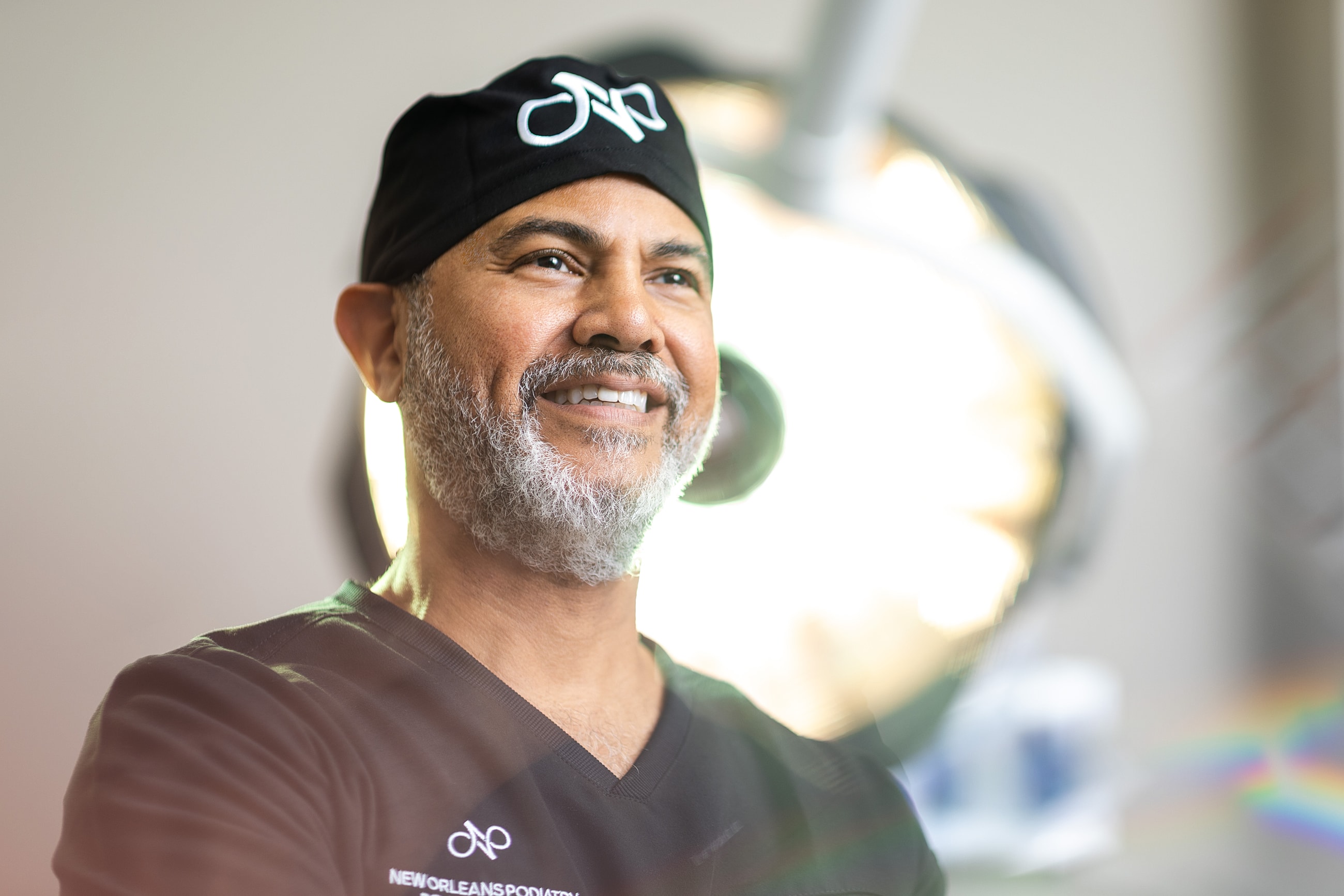
Traditional open foot surgery often requires long incisions, significant tissue disruption, and extended recovery times. Minimally Invasive Surgery (MIS) is different.
Using specialized instruments and advanced imaging, Dr. Lang performs corrections through incisions that are often just millimeters long. This approach minimizes damage to healthy tissue, reduces postoperative pain, and allows many patients to walk on the operative foot much sooner than with traditional methods.
Whether you are dealing with a painful bunion, a rigid hammertoe, or a bone spur, MIS offers a modern path to relief. We offer MIS options for several common conditions:


Correcting the bone alignment with minimal soft tissue disruption.
Releasing tight tendons or removing small pieces of bone to straighten the toe.
Shaving down painful bony prominences that cause shoe irritation.
A minimally invasive release of the plantar fascia for chronic heel pain that has not responded to conservative treatment.
Adjusting toe length for structural imbalance, pain relief, or cosmetic improvement

Often requiring only one or two stitches, leading to minimal scarring.
Preserves healthy tissue, reducing postoperative swelling and pain.
Many patients can bear weight on the foot immediately or shortly after surgery.
Reduced tissue disruption means many patients require less pain medication post-surgery.

Experience matters when precision determines your outcome. Dr. Edward Lang has performed more than 21,000 surgical procedures over three decades—bringing the highest standard of surgical care to New Orleans.
Every patient receives a surgical plan tailored to their specific anatomy and lifestyle goals—never a one-size-fits-all approach.
Advanced techniques, including Lapiplasty® 3D Bunion Correction and minimally invasive hammertoe repair, correct the problem while prioritizing your comfort and recovery speed.
And when your surgery is complete, your care continues. Direct access to our team, dedicated follow-up appointments, insurance coordination, and Dr. Lang available by text until 9 PM—seven days a week.

—New Orleans Podiatry Patient, RateMDs
Recovery from minimally invasive foot surgery is typically faster and more comfortable than traditional open surgery. While every patient heals at their own pace, many are able to walk in a protective surgical shoe the same day. Swelling and discomfort are generally milder, allowing for a quicker return to daily activities and, eventually, normal footwear.
Many patients with bunions, hammertoes, bone spurs, or plantar fasciitis are excellent candidates for MIS. However, severe deformities or complex revisions may still require traditional approaches. Dr. Lang will perform a thorough evaluation, including on-site X-rays, to determine the safest and most effective surgical option for you.
Because MIS involves smaller incisions and less tissue disruption, most patients experience significantly less postoperative pain compared to traditional surgery. Dr. Lang utilizes advanced local anesthesia and pain management protocols to keep you comfortable during and after the procedure.
Most minimally invasive foot surgeries are performed on an outpatient basis using local anesthesia, often combined with mild sedation (twilight sleep) to ensure you are relaxed and comfortable. You will not need general anesthesia or a hospital stay.
One of the primary benefits of MIS is the ability to bear weight sooner. Many patients can walk on the operative foot in a specialized surgical shoe or boot immediately after surgery. Dr. Lang will give you specific weight-bearing instructions based on your exact procedure
Recurrence depends on the underlying cause of the deformity and the surgical technique used. MIS corrects the structural problem through precise bone repositioning, which reduces — but does not eliminate — the risk of recurrence. Dr. Lang will evaluate your specific deformity and recommend the approach most likely to provide lasting correction, which in some cases may include Lapiplasty® 3D bunion correction for more complex bunions.